Independent directory — we compare Columbia wildlife removal companies; we don't do the work ourselves.
Columbia, SC · Independent directory
We compared wildlife removal companies across the Columbia metro — who removes animals, who publishes a local phone, and what it costs.
Quick answer
Wildlife removal in Columbia typically runs $150–$700 per job for most single-animal situations (snake, opossum, raccoon trapping) and $400–$2,500 for colony work like bat exclusion or full-home sealing, based on national cost data and published local pricing compiled September 2026. South Carolina requires nuisance wildlife operators to register with SC DNR, and bats get special treatment: during the April–July maternity season, colonies with flightless pups cannot legally be excluded — a company that offers to "seal them out" in May is telling you something about itself.
If something is scratching in your attic in Shandon, thumping over your ceiling in Rosewood, or staring at you from the crawl space door — this page is for you. We compared wildlife removal companies across the Columbia metro: who actually removes animals (not just insects), who publishes a local phone number, who understands South Carolina's bat-season rules, and what removal realistically costs here.
Below: the species Columbia homeowners deal with most, what each job costs, and how to choose an operator. This site is an independent directory — we don't remove wildlife ourselves, and no company paid for its position.
Pick your intruder — each guide covers signs, removal methods, local rules and honest prices.
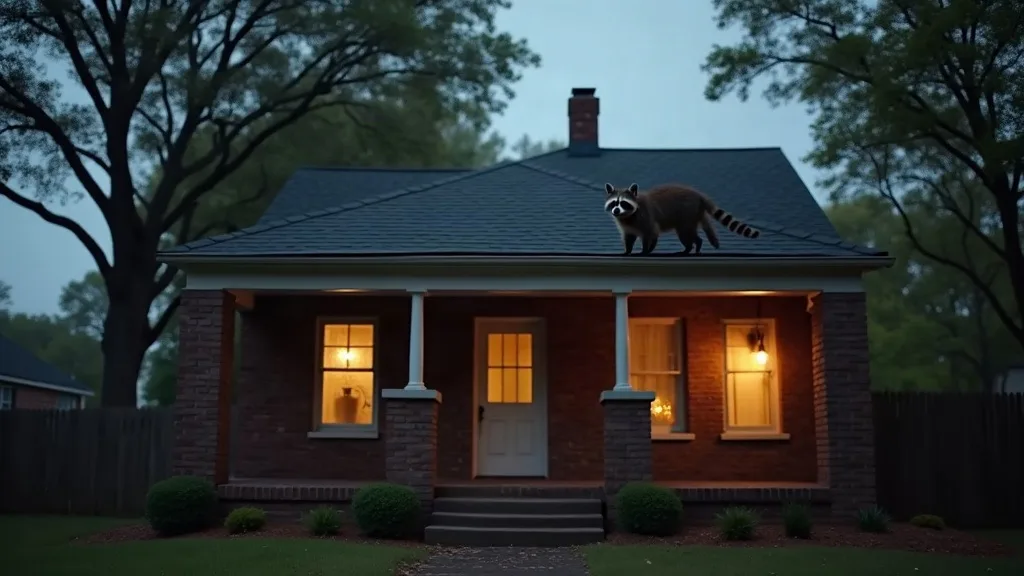
Attic dens, torn soffits, tipped trash cans. Raccoons are Columbia's most destructive attic tenant — and a rabies-vector species in SC.
Colonies in gable vents and attics. Exclusion is the only legal method — and it's restricted during the April–July maternity season.
Daytime scampering overhead, chewed wires and shredded insulation. The classic call from Columbia's older neighborhoods.
Most Columbia snakes are harmless rat snakes — but copperheads are common here. How to tell, and who removes them.
Crawl spaces, sheds and under decks. Slow-moving but messy tenants that foul insulation and ductwork.
The smell that won't leave. Carcass location, removal, disinfection and deodorizing — in walls, attics and crawl spaces.
The half of the job that keeps animals out for good: sealing entry points, screening vents, capping chimneys.
Identify the noise, decide if it's urgent, and learn when Columbia offers free help vs when you pay a pro.
The companies we list cover the whole metro — Richland and Lexington counties. Town-by-town notes on housing stock, local wildlife pressure and prices:
New subdivisions on cleared woodland, construction gaps in young roofs, and raccoon corridors along Twelvemile Creek.
Mature-tree brick ranches from the 70s and 80s, Harbison woods next door, and the Lake Murray shoreline wildlife mix.
River-corridor towns where high water pushes snakes and opossums into yards, and older pier-and-beam homes offer crawl-space dens.
An inner-ring suburb named for its canopy — the classic Columbia squirrel call, plus raccoons in mid-century chimneys.
Where the metro meets horse country: big wooded lots, barns and outbuildings, and copperheads where clearing meets timber.
Most Columbia wildlife calls start the same way: a noise at dawn or after dark, and a guess. Squirrels sound like someone rolling acorns across the ceiling at 6 a.m.; raccoons are slow, heavy thumps after sunset; bats are a faint scratching near the walls at dusk, plus guano on the porch below a gable vent. Our homeowner's guide walks through identifying the animal by sound and sign, the first steps that are safe to take yourself, and the honest answer to "can I get this done free" — Richland County Animal Services handles dogs and cats, not the raccoon in your attic, so most wildlife situations on private property are a paid, private service.
What you won't find here: anonymous lead-generation sites with a Columbia keyword for a name, a national 800 number, and no listed office (several rank in Google for Columbia wildlife searches). If a "company" won't say where it is or who works there, it's selling your phone number.
Want the full list with phones and service areas in one place? See all Columbia wildlife removal companies we've verified so far.
A single-animal job — a snake in the garage, an opossum under the deck, a trapped raccoon — typically lands between $150 and $700. Multi-visit jobs cost more because they are more: bat exclusion on a typical Columbia home runs $400–$1,500 (large colonies or full guano cleanup push past $2,000), and whole-home exclusion sealing runs $500–$2,500 depending on how many entry points your roofline offers.
The two biggest price drivers are species (bat colonies and raccoon families are multi-visit projects; a snake is one visit) and how much damage cleanup is included. Inspection is often free — several Columbia companies advertise free inspections — so a written scope should cost you nothing to collect.
Most single-animal removals (snake, opossum, one raccoon) run $150–$700. Bat exclusion typically costs $400–$1,500 for a standard home, squirrel removal with entry-point sealing $300–$1,000, and dead animal removal $150–$400. Ranges compiled from national cost data and published local pricing, September 2026 — get a written scope, since inspections are usually free.
Not for wildlife on private property. Richland County Animal Services handles domestic animal issues — stray dogs, dangerous animals, cruelty reports — but does not remove raccoons, squirrels, bats or snakes from your attic. Wildlife removal on private property is a paid private service. Some companies advertise free inspections, which at least gets you a diagnosis and quote at no cost.
Bat exclusion is restricted during maternity season — roughly April through July in South Carolina — when flightless pups would be sealed in to die. Reputable operators exclude colonies outside that window using one-way bat valves, or in summer will do the prep work and schedule the final exclusion for August. A company offering to seal or trap a colony in June is one to avoid.
Most are not. South Carolina has 38 snake species and only 6 venomous ones; around Columbia the venomous species you're realistically likely to meet is the copperhead — thick-bodied, hourglass-shaped bands, often in leaf litter and wood piles. Harmless rat snakes are far more common and actually eat the rodents you don't want. If you can't tell, keep kids and pets away and call a removal service — do not handle or kill the snake.
Private wildlife removal companies — technically Nuisance Wildlife Control Operators registered with SC DNR — handle attic animals. The companies we verified are listed on our Columbia companies page with published phone numbers and service areas.
Sometimes the damage, rarely the removal. Policies often cover sudden damage an animal causes (a raccoon tearing through a roof) but exclude the removal itself and damage from nesting rodents. Document damage with photos before cleanup and ask your insurer directly — answers vary by policy.
Noises in the attic, droppings, a snake you'd rather not identify — describe it on one call and hear the next step from a local specialist.