Independent directory — we compare Columbia wildlife removal companies; we don't do the work ourselves.
Quick answer
Raccoon removal in Columbia typically costs $300–$700 for a single raccoon trapped and removed; a mother with kits in an attic runs $500–$1,500+ once cleanup and entry-point sealing are included. The standard method is humane live-trapping or a one-way door over the entry hole — never during baby season without checking for kits. Raccoons are a rabies-vector species in South Carolina, so this is not a DIY-with-gloves job. Local operators handling raccoons include Alpha Wildlife, Wild Shield, All Things Wild, Critter Control and Blythewood Wildlife Removal.
Price ranges compiled from national cost data and published local pricing, September 2026. Final pricing follows an on-site inspection — most Columbia companies inspect free.
24/7 — speak with a local wildlife specialist now.
Call (803) 910-6021Free to call, no obligation. Describe what's in your attic, walls or crawl space.
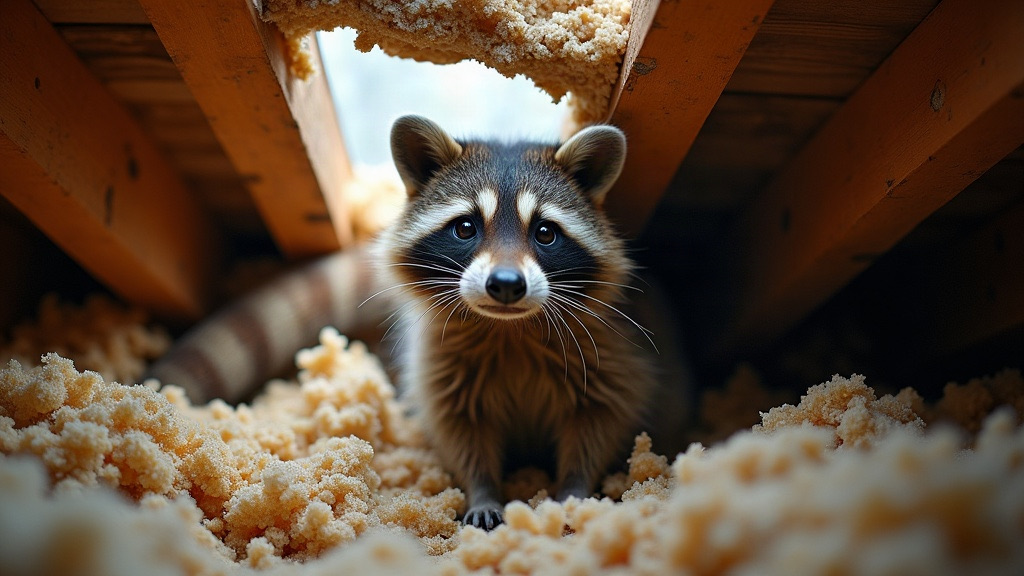
Columbia is raccoon habitat with houses in it. The Congaree River corridor and the creek systems through the metro give raccoons travel routes deep into town, and the older neighborhoods — Shandon, Rosewood, Melrose Heights, Forest Acres — offer exactly what a raccoon wants: mature trees touching rooflines, aging soffits, and attics that haven't been re-sealed since the house was built. Add mild winters and year-round garbage cans, and Columbia raccoons never really leave; they just move indoors.
Raccoons do the most damage of any common Columbia attic animal. They don't squeeze through existing holes — they manufacture them, tearing soffits, prying roof vents and ripping shingles. Inside, they compact insulation into latrines (raccoons defecate in dedicated spots, and the droppings can carry Baylisascaris roundworm), chew wiring, and damage ductwork. The fire-hazard wiring and the latrine contamination are why "wait and see if it leaves" is the expensive strategy.
In South Carolina, anyone removing nuisance wildlife commercially must be registered with SC DNR as a Nuisance Wildlife Control Operator (NWCO). Ask for it — registration is how you know the person on your roof is accountable to someone.
Raccoons are a rabies-vector species, and South Carolina restricts how they can be relocated; a licensed operator handles transport and release legally. Homeowners may trap nuisance wildlife on their own property, but handling a trapped raccoon — stressed, strong, and a bite risk — is where DIY plans reliably end. If you see a raccoon active in daylight acting disoriented or aggressive, keep everyone away and mention it when you call: it's a possible rabies or distemper case.
A straightforward single-raccoon trap-and-remove runs $300–$700. Mother-with-kits attic jobs run $500–$1,500+ because they add retrieval, more visits and cleanup. Sealing entry points adds $300–$1,000 depending on how many holes the house offers, and heavy latrine contamination can add attic restoration at $1,500–$5,000+. Full breakdown: wildlife removal cost in Columbia.
Compare written scopes from two companies — our Columbia companies list has published phone numbers for the local operators.
Sound and timing tell you: raccoons are heavy, slow and nocturnal — thumping and walking sounds after dark, not the fast scampering of squirrels at dawn. Outside, look for torn soffits, a damaged roof vent, muddy paw prints on downspouts, and tipped trash cans. In the attic, large droppings collected in one spot (a latrine) are the confirmation.
Rarely, and the waiting costs you. A female with a den stays until her kits are grown — months. A lone raccoon may rotate den sites but returns to a good one. Meanwhile the latrine grows and the wiring gets chewed. Removal plus entry-point sealing is the fix; waiting is the delay.
Homeowners can trap nuisance wildlife on their own property in SC, but raccoons are a rabies-vector species with relocation restrictions, and a cornered raccoon is a genuine bite risk. Commercial removal requires SC DNR NWCO registration. The realistic DIY version: secure your trash, remove pet food, and call a pro for the animal itself.
The main birthing season is spring, roughly March through June, with a smaller second wave in late summer. Any attic job in that window should start with a kit check — reputable companies do this automatically. A quote that doesn't mention babies in April is a quote from someone who didn't look.
Sometimes the damage, rarely the removal. Policies may cover sudden physical damage (a torn roof, ruined insulation from a single event) but exclude the animal's removal and gradual contamination. Photograph everything before cleanup and ask your insurer directly.
Noises in the attic, droppings, a snake you'd rather not identify — describe it on one call and hear the next step from a local specialist.