Independent directory — we compare Columbia wildlife removal companies; we don't do the work ourselves.
Quick answer
Bat removal in Columbia means exclusion, not trapping: one-way bat valves over the exit holes plus sealing every other gap, typically $400–$1,500 for a standard home and $2,000+ for large colonies or complex rooflines. The rule that defines everything: during the April–July maternity season, colonies with flightless pups cannot be excluded — reputable operators do prep work in summer and finish exclusions from August. Guano cleanup, when needed, is a separate line at $1,000–$4,000.
Price ranges compiled from national cost data and published local pricing, September 2026. Bat work is quoted after inspection; any firm quoting exclusion sight-unseen is guessing.
24/7 — speak with a local wildlife specialist now.
Call (803) 910-6021Free to call, no obligation. Describe what's in your attic, walls or crawl space.
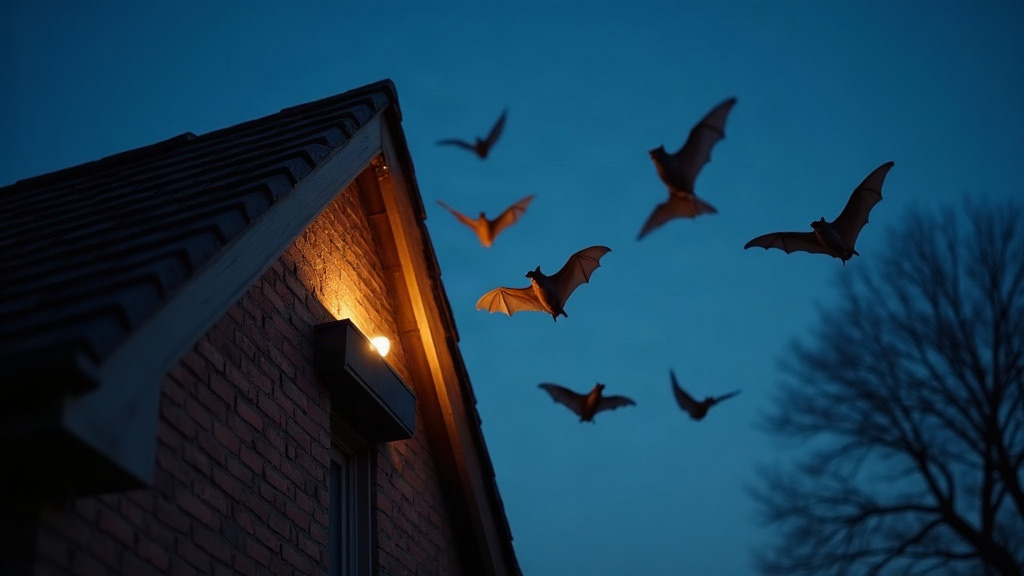
South Carolina has at least 14 bat species, and the ones Columbia homeowners meet in attics are usually big brown bats, little browns, evening bats and Brazilian free-tailed bats. They are genuinely valuable — a colony eats thousands of mosquitoes a night, which matters in a humid river city — and several species are in decline. That combination is exactly why the law protects them: bats cannot be trapped, poisoned or killed, and no legitimate operator will offer to.
The problem is what a colony does to a house. Guano accumulates under the roost, grows mold spores linked to histoplasmosis when dried and disturbed, and its uric acid stains and corrodes. Bats are also the species most associated with human rabies exposure in the US — a bat found in a bedroom with a sleeping person, a child or a pet is a call to DHEC about rabies testing, not just a removal call.
Female bats gather in maternity colonies in spring and give birth to a single pup, which can't fly until midsummer. In South Carolina, that makes roughly April through July the blackout window for exclusions: install a one-way valve over a colony's exit in May and the mothers leave, the flightless pups stay, and you get dying pups inside the walls — inhumane, and it converts a bat problem into a dead-animal-in-the-walls problem.
So the honest calendar looks like this: August through March is exclusion season — valves installed, gaps sealed, done in one to two weeks. April through July, reputable Columbia operators will inspect, seal the gaps that aren't active exits (reducing the colony's access), and schedule the final exclusion for after the pups fly. A company that offers full exclusion in June is either ignorant of the rules or ignoring them.
Exclusion on a typical Columbia home runs $400–$1,500; large colonies, steep rooflines or older homes with many gaps push past $2,000. Guano cleanup and insulation replacement add $1,000–$4,000. The full price context is on our Columbia cost page, and the operators who list bat work are on the companies page.
The final exclusion — one-way valves over the exits — waits until pups can fly, roughly August. During April–July, legitimate companies inspect, seal inactive gaps, and book the exclusion for late summer. Emergency removal of a single bat inside living space happens year-round.
Maybe. A single bat in living space in summer is sometimes a lost juvenile from an attic colony — worth an attic inspection. But treat the bat itself seriously first: if anyone was sleeping in the room, or a child or pet had access, contact DHEC about rabies testing before releasing it. Bat bites can be too small to notice.
Accumulated guano can grow Histoplasma capsulatum, a fungus whose spores cause histoplasmosis when inhaled — the reason cleanup is a masked, contained job, not a shop-vac afternoon. Small fresh deposits under a vent are low-risk; years of accumulation in a hot attic are not.
A bat house is a good complement to exclusion — it gives the colony somewhere legal to go — but it does nothing while the attic is still open. Exclude first, then mount a bat house on a pole or tree at least 15 feet up if you want to keep the mosquito control.
$400–$1,500 for typical exclusion, $2,000+ for large colonies or complex rooflines, plus $1,000–$4,000 for guano cleanup when needed. Inspections are often free; the maternity-season rules mean timing, not price, is usually the constraint.
Noises in the attic, droppings, a snake you'd rather not identify — describe it on one call and hear the next step from a local specialist.