Independent directory — we compare Columbia wildlife removal companies; we don't do the work ourselves.
Quick answer
Wildlife exclusion — finding and sealing every gap an animal can use — typically costs $500–$2,500 for a whole Columbia home, with single-entry repairs from $150–$300. It's the difference between solving a wildlife problem and subscribing to one: removal gets the animal out; exclusion keeps the next one out. Look for chew-proof materials (steel mesh, metal flashing, proper vent covers) and a written warranty — one year is common, some companies warranty repairs for longer.
Price ranges compiled from national cost data and published local pricing, September 2026. Exclusion is priced by the number and difficulty of entry points, so it's quoted after inspection.
24/7 — speak with a local wildlife specialist now.
Call (803) 910-6021Free to call, no obligation. Describe what's in your attic, walls or crawl space.
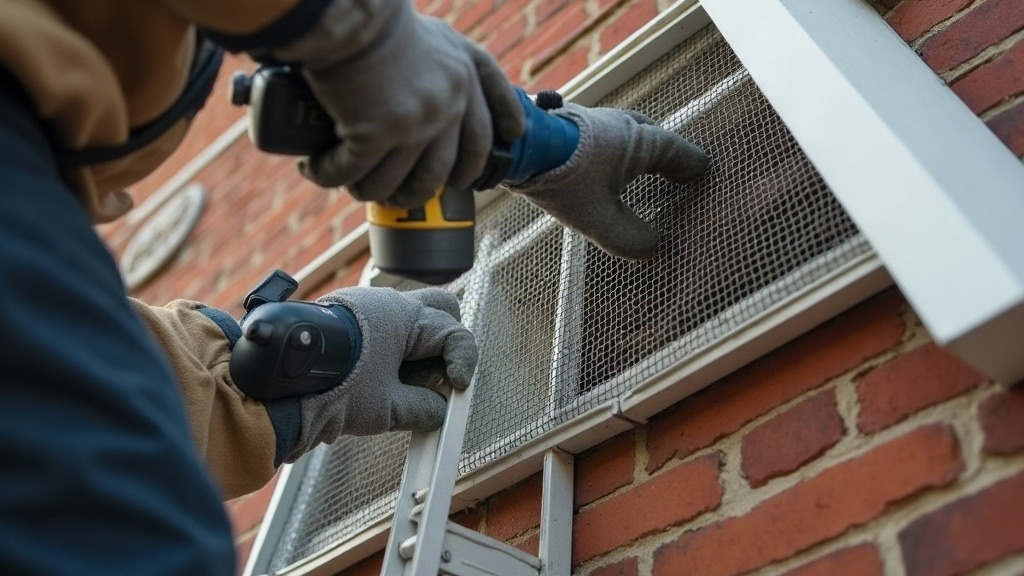
An exclusion job is a systematic seal of the building envelope against the animals that live here. On a typical Columbia home the work list hits the same spots: gable and ridge vents (screened inside and out), soffit and fascia gaps (the classic raccoon and squirrel entry), roofline construction gaps at eave returns, chimney caps, crawl-space vents and doors, foundation openings, dryer and bathroom vents (guards that still vent properly), and plumbing and HVAC penetrations.
Materials matter more than labor rates. A raccoon tears hardware-store foam and plastic vent covers in one night; exclusion that lasts uses heavy-gauge steel mesh, galvanized flashing and metal vent covers. Older Columbia homes — the 1920s–1950s stock in Shandon, Rosewood and Earlewood — routinely have a dozen-plus gaps, which is why whole-home exclusion here costs more than the brochure minimum.
Exclusion normally follows removal: the animals are out, verified out, and then every entry point closes. One-way doors are the hybrid — an exclusion device that lets animals leave and not return — used for squirrels, raccoons and bats when the situation allows.
Two timing rules matter in South Carolina. Bats: full exclusion is off the table during the April–July maternity season — inactive gaps can be sealed in summer, but the final exits wait until pups fly (details on the bat page). Baby season for raccoons and squirrels (spring): never seal an active den with young inside — the nest check comes first. A company that quotes full sealing in April without mentioning babies hasn't looked in your attic.
Because exclusion is the permanent half of wildlife control, the warranty is the product. One-year warranties on sealed entry points are standard; some Columbia-area companies advertise longer (Wild Shield, for example, states a lifetime repair guarantee on its exclusion repairs). Get the warranty in writing, with what's covered and for how long, and ask whether it transfers if you sell the house.
Questions worth asking every bidder: How many entry points did you find, and will you show me photos? What materials go over each gap? Is the price for sealing everything found, or per-entry? What happens if an animal gets back in through your repair? The answers separate exclusion as a craft from exclusion as a line item.
Single-entry repairs run $150–$300; partial exclusion (the attic line only, say) $300–$800; whole-home exclusion $500–$2,500, with large or complex older homes above that. Compare it to the alternative: a repeat raccoon job every other year at $500 a visit, plus the insulation each tenant ruins. Full price context: Columbia cost page; companies listing exclusion: companies page.
Usually yes. Animals mark successful entry points with scent, and a gap that admitted one squirrel admits the next. If the inspection found exactly one small gap, the repair is cheap; if it found a dozen, the house was always going to have a wildlife problem — exclusion is when you stop paying for it repeatedly.
Handyman-capable homeowners can screen a gable vent or cap a chimney. The limits: finding every gap takes experience (animals use gaps you'd never notice), roofline work is fall-risk work, and sealing an active den with animals inside converts the job into a dead-animal job. DIY the materials, get a professional inspection of what to seal.
Heavy-gauge galvanized or stainless steel mesh, metal flashing, and rigid metal vent covers. What fails: expanding foam alone, plastic vent covers, window screen, and wood stuffed in a hole. If a quote lists foam as the primary material, that's a red flag.
Generally no — exclusion is prevention, and insurance covers sudden damage, not prevention. Some policies contribute to repairing damage an animal caused (a torn roof vent), which overlaps with exclusion materials; worth asking, but budget exclusion as out-of-pocket.
Most Columbia homes take one to two working days once scheduled, more for large or multi-story homes. Bat exclusions add the one-to-two-week valve period before final sealing.
Noises in the attic, droppings, a snake you'd rather not identify — describe it on one call and hear the next step from a local specialist.